With the proliferation of smart homes, electronic door locks have evolved from simple keyless entry devices into home security hubs that combine biometric authentication, video surveillance, remote management, and smart automation. Among the various unlocking methods, vein recognition has gradually become a key selling point of high-end smart locks in recent years. Lockin is one of the leading brands applying finger vein and palm vein recognition technologies to smart home locks.
Vein recognition is not simply "another type of fingerprint." It uses infrared light to read the distribution of veins beneath the skin, identifying internal biometric features that are not easily exposed. For Hong Kong households that prioritize privacy, reliability, hygiene, and everyday user experience, vein recognition offers a new alternative to traditional fingerprint and facial recognition.
This article will explore the operating principles of vein recognition, Lockin's technology features, and the key differences between vein recognition and fingerprint and facial recognition, helping you determine which smart lock is best suited for your home.

How Vein Recognition Works
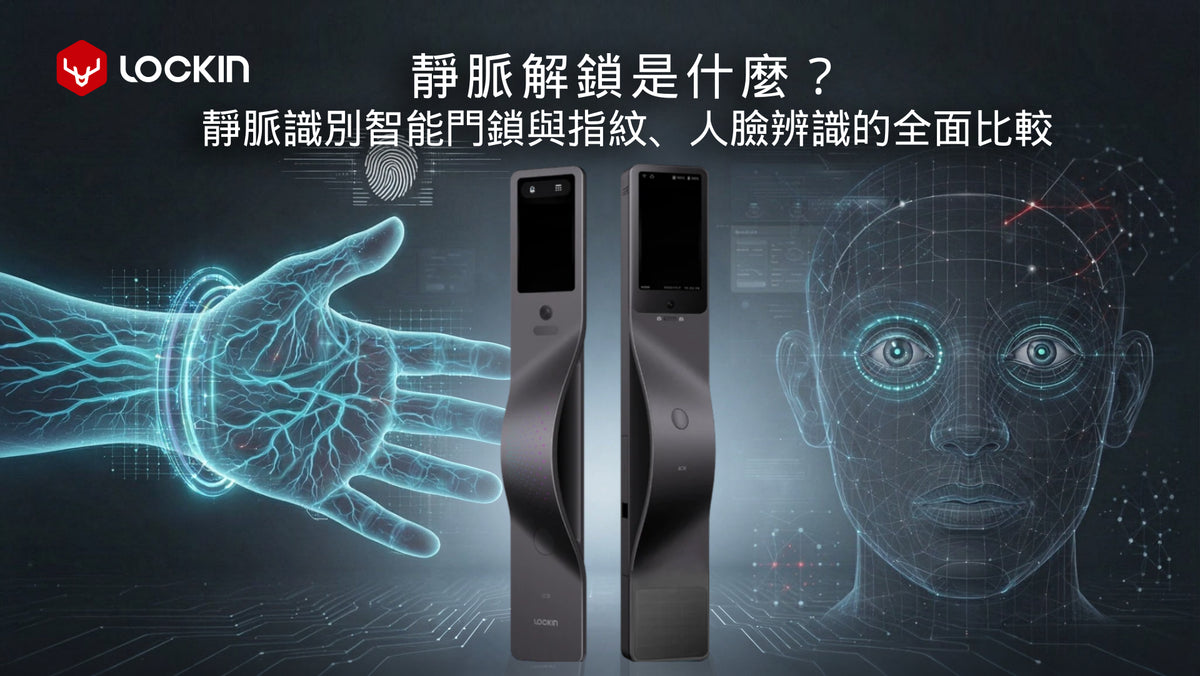
Vein recognition uses near-infrared light to illuminate the finger or palm. Since hemoglobin in the blood absorbs infrared light, the sensor can capture the unique distribution of veins beneath the skin. The system then compares the vein pattern with a registered template and unlocks only after confirming the user's identity.
Unlike fingerprints, vein features are located beneath the skin and are not completely rendered ineffective by worn skin, dirt, sweat, or minor wounds. Compared to facial recognition, vein data is also less likely to be captured or observed in everyday environments like facial images, giving it a unique advantage in terms of privacy and anti-spoofing.
Lockin's vein recognition technology is mainly divided into two types:
- Finger vein recognition: The user places or brings their finger close to the sensor area to read the vein distribution inside the finger, suitable for users accustomed to unlocking with their finger.
- Palm vein recognition: The user brings their entire palm close to the sensor area to read the palm vein distribution, providing a contactless and more natural unlocking gesture.
According to Lockin's official data, its Venokey vein recognition technology uses multispectral fusion, achieving an identification speed of approximately 0.17 seconds and an accuracy rate of 99.9%, while supporting deep biometric methods such as finger and palm vein recognition.

What Makes Lockin Vein Recognition Unique
Lockin does not merely view vein recognition as an added feature, but as one of the core technologies for the smart lock security experience. Its product line covers finger vein, palm vein, 3D facial recognition, peephole monitoring, app management, and smart home integration, allowing users to choose the most suitable unlocking method based on family members and lifestyle habits.
1. Reads subcutaneous features rather than relying solely on the skin surface
Traditional fingerprint recognition mainly relies on the texture of the fingertip surface. If the finger is wet, dry, peeling, wounded, dirty, or if an elderly person's fingerprints have become blurred due to age, the recognition success rate may be affected.
Vein recognition reads the distribution of veins beneath the skin, so it generally provides a more stable recognition experience for people with sweaty hands, dry skin, faint fingerprints, the elderly, or worn fingerprints from manual labor.
2. Contactless unlocking, more hygienic and convenient
The biggest user experience advantage of palm vein recognition is that there is no need to press the finger on the sensor. Users only need to bring their palm close to the sensor area for the system to complete recognition, reducing direct contact with the lock surface.
For Hong Kong households, this feature is particularly useful in the following situations:
- Carrying shopping bags, takeout, or baby supplies with both hands
- Coming home with oily or wet hands after cooking in the kitchen
- Returning home after exercise, in the rain, or in humid weather
- Families with elderly people, children, or hygiene-conscious members
- Wanting to reduce frequent touching of the lock surface
Lockin also points out that its palm vein recognition can work with wet, dry, cold, or worn hands, completing contactless unlocking in approximately 0.17 seconds.
3. High-speed recognition, reducing waiting time at the door
The actual experience of a smart lock depends largely on recognition speed and success rate. If you need to try multiple times, adjust the angle, or wait for the system to respond every time you return home, even with many features, it will affect the everyday user experience.
Lockin's vein recognition technology can complete recognition in approximately 0.17 seconds, with an accuracy rate of 99.9%. In addition, TÜV Rheinland has verified Lockin's palm vein recognition rate and recognition speed, showing that its average recognition time does not exceed 0.17 seconds, and the average recognition success rate is no lower than 99.9%.
4. Vein features are hidden beneath the skin, offering superior privacy protection
Facial features are widely exposed through daily social interactions, photos, and video recordings; fingerprints are also left on doorknobs, phone screens, glass, or other objects. In contrast, veins are located beneath the skin and are not external features that can be directly observed by the naked eye, making them relatively harder to copy, steal, or forge.
This does not mean that vein recognition is absolutely impossible to crack. Any biometric system should still be combined with encryption, firmware updates, permission management, and physical anti-theft designs. However, in terms of the exposure of the biometric features themselves, vein recognition is indeed harder for others to obtain easily than fingerprint and facial recognition.
5. Suitable for family members of different ages and hand conditions
Vein recognition is particularly suitable for the following users:
- People with faint, blurred, or worn fingerprints due to work
- People with sweaty hands, dry skin, or peeling skin
- The elderly, especially those whose fingerprint patterns have become faint with age
- Children, as their fingerprints may not yet be fully developed
- Families that prioritize contactless, hygiene, and a fast unlocking experience
Lockin points out that its palm vein technology is suitable for use by people of different ages and can work with wet, dry, cold, or worn hands.

Vein Recognition vs. Fingerprint Recognition
Fingerprint recognition is the most popular biometric method, with intuitive operation and relatively lower costs, making it suitable for most families. However, fingerprint recognition relies on the texture of the fingertip surface, so it is more sensitive to hand conditions and sensor cleanliness.
| Comparison Item | Vein Recognition | Fingerprint Recognition |
|---|---|---|
| Recognition Target | Subcutaneous vein distribution | Fingertip surface texture |
| Method of Contact | Palm vein recognition is usually contactless | Generally requires pressing the sensor |
| Wetness, sweat, dirt | Relatively less affected | More easily affected |
| Fingerprint wear, peeling, and wounds | Relatively low impact | May reduce recognition success rate |
| Privacy exposure | Veins are under the skin and are not easily observed | Fingerprints remain on the surface of objects |
| Anti-forgery capability | More difficult to forge using photos or surface copying | More easily affected by surface marks |
| Suitable users | Elderly, children, people with sweaty hands, or unclear fingerprints | People with clear fingerprints who are accustomed to pressing to unlock |
| Cost of use | Relatively higher technical threshold and hardware costs | Highly popular, relatively lower cost |
Fingerprint recognition remains a reliable and convenient entry-level biometric method, but if family members frequently encounter issues with fingerprints not being read, needing to retry several times, or being unable to open the door with wet hands on rainy days, vein unlocking is a worthwhile upgrade to consider.
Vein Unlocking vs. Facial Recognition
The advantage of facial recognition lies in the experience of unlocking as you approach: users do not need to take out keys, enter a code, or reach out specially, as the system can recognize the face when approaching the door. For families with their hands full of items, who frequently enter and exit, or who value a seamless experience, 3D facial recognition is extremely convenient.
However, facial recognition also faces some practical limitations, including changes in lighting, masks, hats, glasses, hairstyles, camera angles, and the fact that facial images are relatively easy for outsiders to obtain. Vein recognition, on the other hand, completes recognition by actively approaching the palm or finger, and the features themselves are hidden beneath the skin, giving it an advantage in privacy and anti-forgery.
| Comparison Item | Vein Unlocking | Facial Recognition |
|---|---|---|
| Recognition Target | Finger or palm veins | 3D facial features |
| Method of Use | Extend a hand or bring the palm close to the sensor | Simply approach the camera |
| Ambient Light Impact | Infrared recognition, relatively low impact from visible light | May be affected at night, in backlight, or under strong light |
| Masks, hats, hairstyles | Unaffected | May affect recognition |
| Privacy Exposure | Veins are hidden under the skin | Facial features are more easily obtained through everyday photography |
| Anti-forgery Capability | More difficult to forge with photos or videos | Relies on 3D structured light, liveness detection, and other technologies |
| Key Experience | Active, stable, suitable for people with varying hand conditions | Passive, seamless, suitable for people whose hands are occupied |
It is worth noting that vein unlocking and facial recognition are not mutually exclusive but complementary. An ideal high-end smart door lock will often provide multiple unlocking methods, including vein, facial recognition, password, app, and mechanical key, allowing different family members to choose according to their needs.

How to Choose Lockin Vein Door Locks
Among the Lockin products currently offered by Easylock, many models are equipped with vein recognition or advanced biometric features, suitable for different budgets and home needs.
| Model | Vein Recognition Type | Suitable Scenarios |
|---|---|---|
| Lockin V5 Max | Palm vein | Suitable for families seeking contactless unlocking, large-screen interaction, and smart monitoring |
| Lockin S6 Max | Finger vein | Suitable for users who want to complete vein unlocking with their finger |
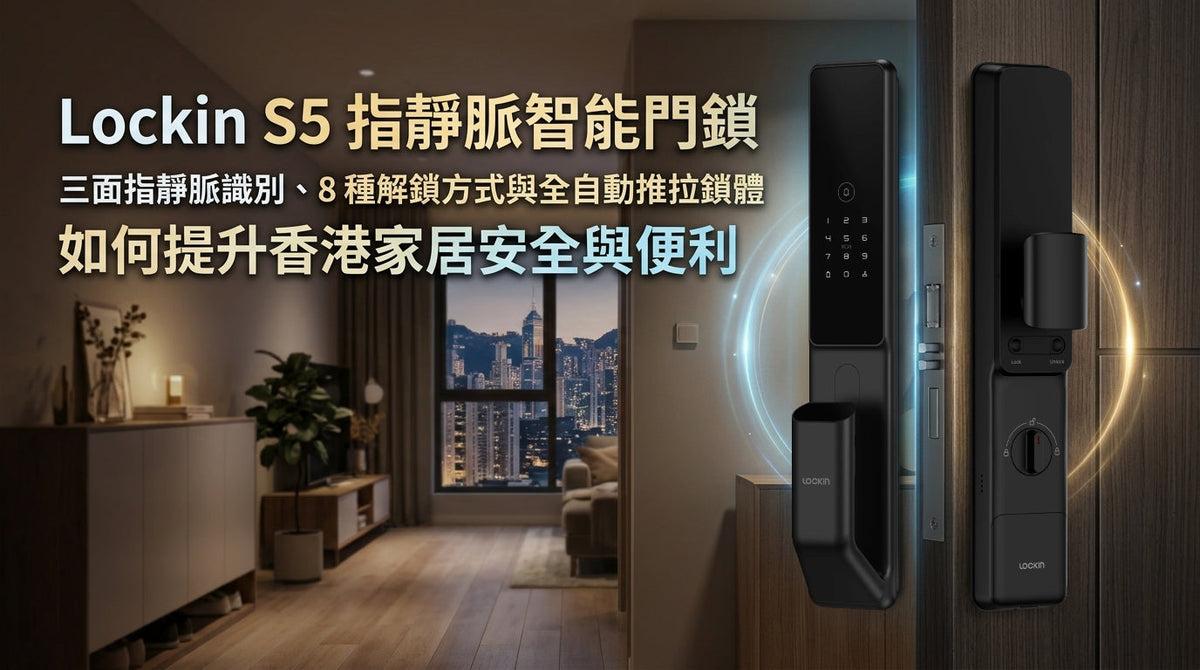
| Lockin S5 | Finger vein | Suitable for families with a more affordable budget who still value vein recognition |
| Lockin V7 Max | Palm vein, finger vein, and 3D facial recognition | Suitable for families seeking multiple biometric methods, AI features, and a premium experience |
| Lockin X9 | Seven-in-one fingerprint recognition | Suitable for users who want to experience the basic features of a smart door lock at a more affordable price |
If there are elderly or children in the family, or if family members frequently encounter unlocking issues due to sweaty hands, peeling skin, or unclear fingerprints, the V5 Max, S6 Max, or S5 would be more direct choices for vein recognition. If you want to enjoy palm vein, finger vein, 3D facial recognition, peephole monitoring, and AI features at the same time, you can consider the V7 Max.
Why Vein Unlocking is Suitable for Hong Kong Families?
Hong Kong's densely populated living environment, humid weather, and the fact that many families need to accommodate the elderly, children, domestic helpers, visitors, and different lifestyles make the stability and convenience of door locks particularly important.
The value of vein unlocking lies in the fact that it addresses several common pain points:
- Humid weather and sweaty hands: Vein recognition does not rely on the surface of the fingertip and is less affected by sweat and moisture.
- Use by the elderly and children: No need to remember complex codes, and palm vein recognition is also suitable for people who have difficulty pressing their fingers.
- Carrying heavy items home: Palm vein recognition can be completed without contact, reducing the need to free up a hand to press the door lock.
- Focus on home privacy: Vein features are hidden under the skin and are not as easily obtained as fingerprints or facial images.
- Management of multiple family members: Different permissions can be set for family members, combined with an app, password, and mechanical key as backup options.
Precautions for Purchasing a Vein Smart Door Lock
Although vein unlocking has many advantages, the following points should still be considered when purchasing:
- Confirm the recognition type: Finger vein and palm vein recognition methods differ, so choose according to the family members' habits.
- Pay attention to the door type and thickness: Some smart door locks have requirements for door thickness, door frames, opening direction, and door hardware.
- Confirm the backup unlocking method: Even if vein unlocking is adopted, ensure that a password, app, mechanical key, or emergency power supply is available.
- Understand network and privacy settings: If remote unlocking, notifications, or video features are used, confirm data encryption, permission management, and firmware update arrangements.
- Choose professional installation: Smart door locks involve door modification, lock body alignment, electronic settings, and anti-theft structures, and professional installation helps ensure long-term stable operation.
As a Lockin Hong Kong specialty store, Easylock provides purchasing consultation, original factory warranty, and licensed locksmith installation support, suitable for Hong Kong families who want to complete purchasing, installation, and after-sales arrangements all at once.
Conclusion: Vein Unlocking is the Next Step for Smart Door Locks
Fingerprint unlocking brought the convenience of keyless access, while facial recognition brought the experience of unlocking as you approach into the mainstream; vein unlocking, on the other hand, takes biometric recognition from the surface of the skin to beneath the skin, balancing privacy, stability, hygiene, and anti-forgery capabilities.
For Hong Kong households that prioritize home security, have elderly family members or young children, frequently encounter sweaty hands or fingerprint recognition issues, and wish to enjoy a contactless entry experience, Lockin’s finger vein and palm vein smart locks offer an upgrade worth serious consideration.
To find out which Lockin vein lock is best suited for your door, door thickness, and household needs, please contact Easylock Hong Kong Specialty Store, where a professional team can provide purchasing and installation advice.